

“Woah, that’s a lot o’ ridge ridin’!”
That’s how the National Park Service ranger at the entrance to Shenandoah National Park reacted when we told him we’d just completed our two-day, south-to-north drive along the entire Blue Ridge Parkway, a 469-mile continuous roadway through the southern Appalachians that directly connects Great Smoky Mountains National Park at the southern end to Shenandoah National Park to the north.
On a recent cross-country road trip, my husband and I had two uncommitted days in our schedule to get from Knoxville, Tennessee to Washington, D.C. and determined that the Blue Ridge Parkway would get us there. As novices to the area, our goal for those days was for the experience to serve as an introduction and overview to the parkway.
At first glance, 469 miles in two days didn’t seem like a lot of road to cover. But when we realized the maximum speed limit on the entire parkway is 45 mph and that often you end up going slower in the mountainous conditions, we knew it would be two long driving days. Then add in frequent stops along the way to enjoy the expansive views at one of the hundreds of designated overlooks, and we could understand why the official parkway map advises travelers to consider 30 mph to figure actual travel time. And of course that doesn’t allow time for recreation like hiking, picnicking, camping or visiting one of the numerous cultural heritage sites.
 The first morning, we took a leisurely drive through Great Smoky Mountains National Park, and from there entered the southern end of the Blue Ridge Parkway. (The parkway itself is part of the National Park system, like the national parks on either end.) Less than 20 miles in, we stopped at the Waterrock Knob Visitor Center, and it was there we suddenly realized that it was already early afternoon and we had a long way to go to Roanoke, Virginia where we planned to stay overnight. Even so, we took some time at the visitor center to absorb the panoramic views and the brewing storm clouds and to pick up some parkway literature. We also noted there would be no opportunities for lunch along the parkway and made peanut butter sandwiches from our car supplies.
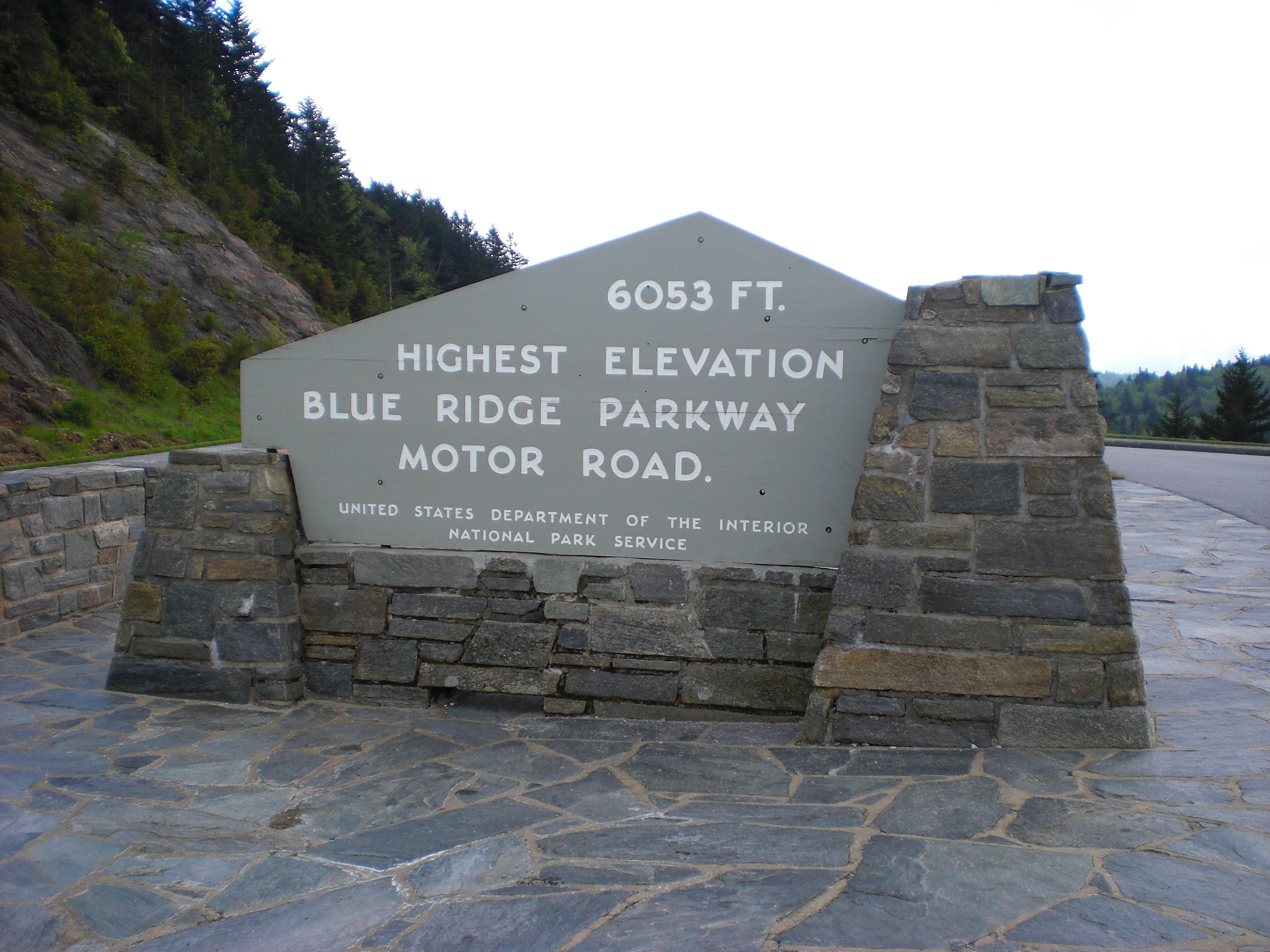
 We moved on, soon passing the highest point on the parkway, and settled into the rhythm of the roadway for the remainder of the day and evening. We discovered that the parkway is a linear series of scenic view overlooks, regional culture heritage sites and outdoor recreation opportunities, with wildflowers and wildlife all along the way.
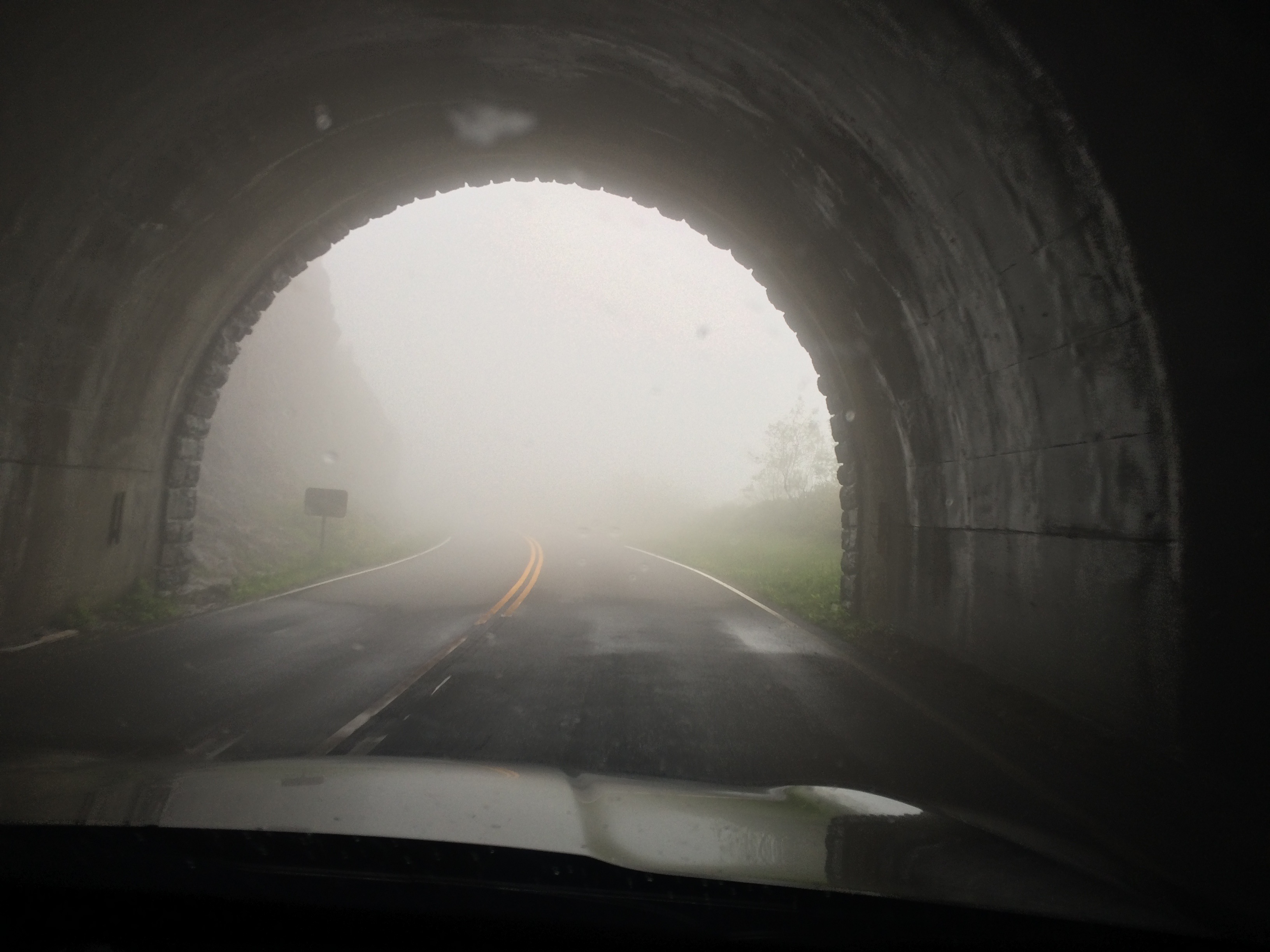
 The southern portion of the parkway is truly a mountain driving experience, with sharp turns, steep grades and rapidly changing weather. We went from broken clouds and sunshine to torrential downpours to dense fog in a matter of hours, with the late-May afternoon temperature dropping to 59 degrees in higher elevations.
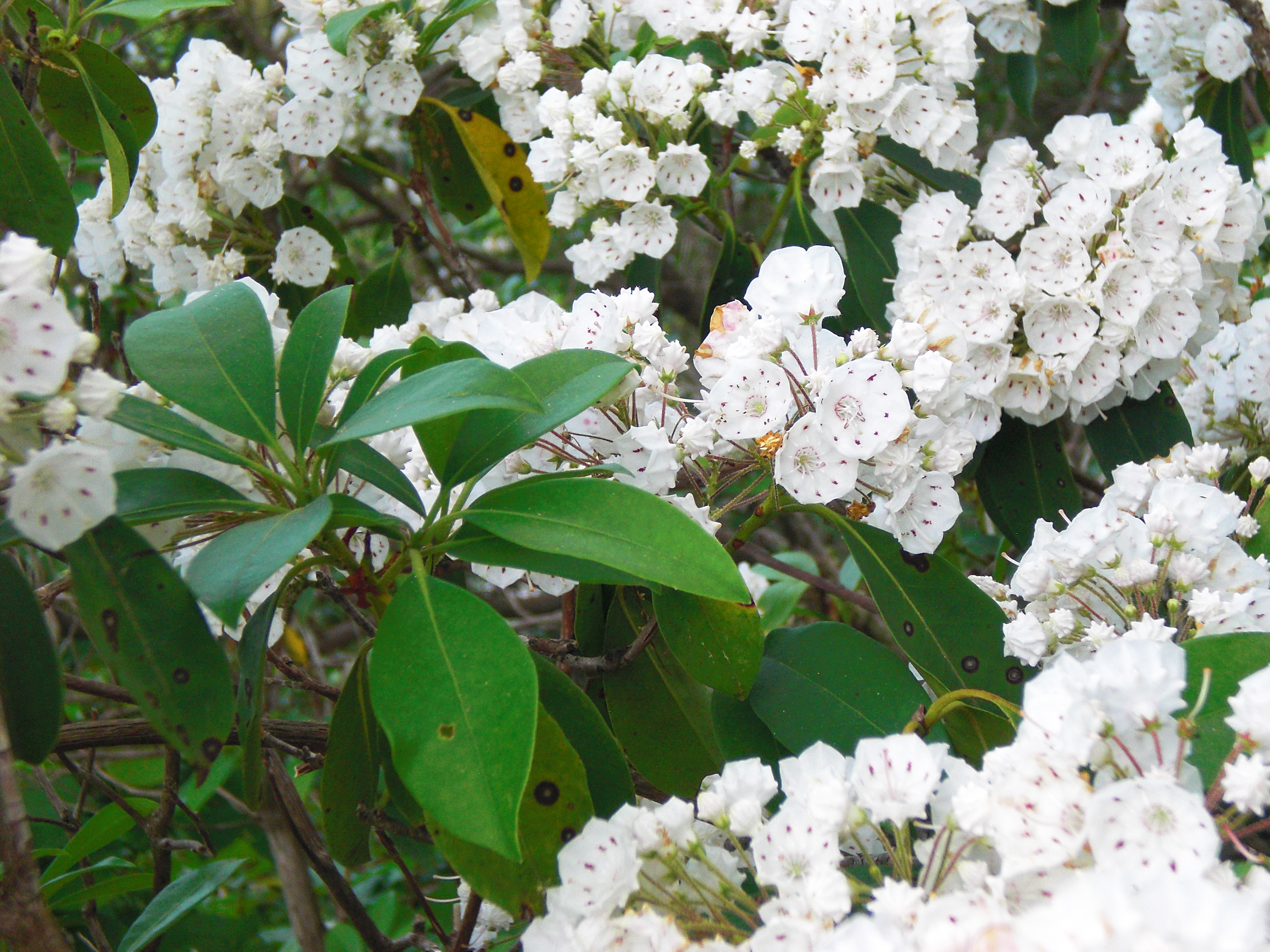
 Throughout the day we passed numerous, huge, colorful expanses of purple rhododendron, orange flame azalea and pink mountain laurel and saw wild turkeys, deer and foxes. (Two foxes scampered across the road actually at a place identified on the map as Fox Hunters Paradise, close to the North Carolina – Virginia state line.)
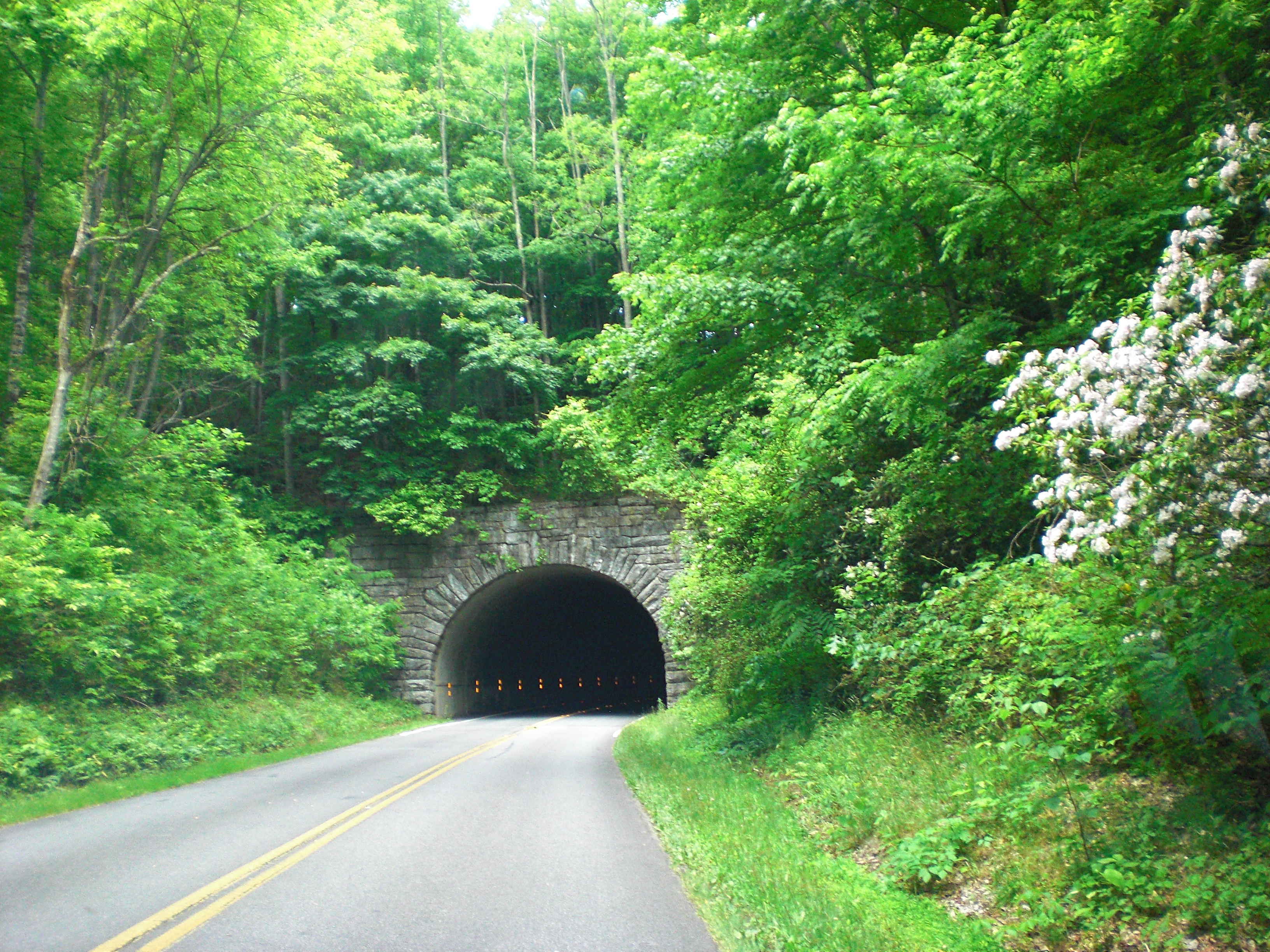
 The parkway passes through 26 tunnels, which, along with bridges and culverts, are faced with native stone in keeping with the original vision that parkway structures harmonize with the natural environment. Experiencing the tunnels, and noting that the current condition of the roadway is excellent, we thought about its construction.
 Road building on the parkway began in 1935 at a time of poverty and unemployment resulting from the Great Depression. The road itself was constructed by multiple contractors providing much-needed jobs, while the Civilian Conservation Corps did landscaping and trail work and built view sheds, park benches and visitor centers. After three decades, it was 95 percent complete in 1966 except for a small section in North Carolina. Eventually that portion was finished and in 1987 the entire parkway was complete, 52 years after construction began.
Gradually, the route became a little straighter and a little less mountainous as we got closer to Virginia. As evening approached, we were still several hours from Roanoke and there were no prospects for a quick dinner without venturing off the parkway into a town maybe 20 miles away, so we decided to continue on. At dusk and into darkness, we estimated spotting at least three dozen deer grazing along the roadside, with one occasionally crossing in front of us. The possibility of deer in the road slowed us down even more, but we eventually arrived in Roanoke well after dark.
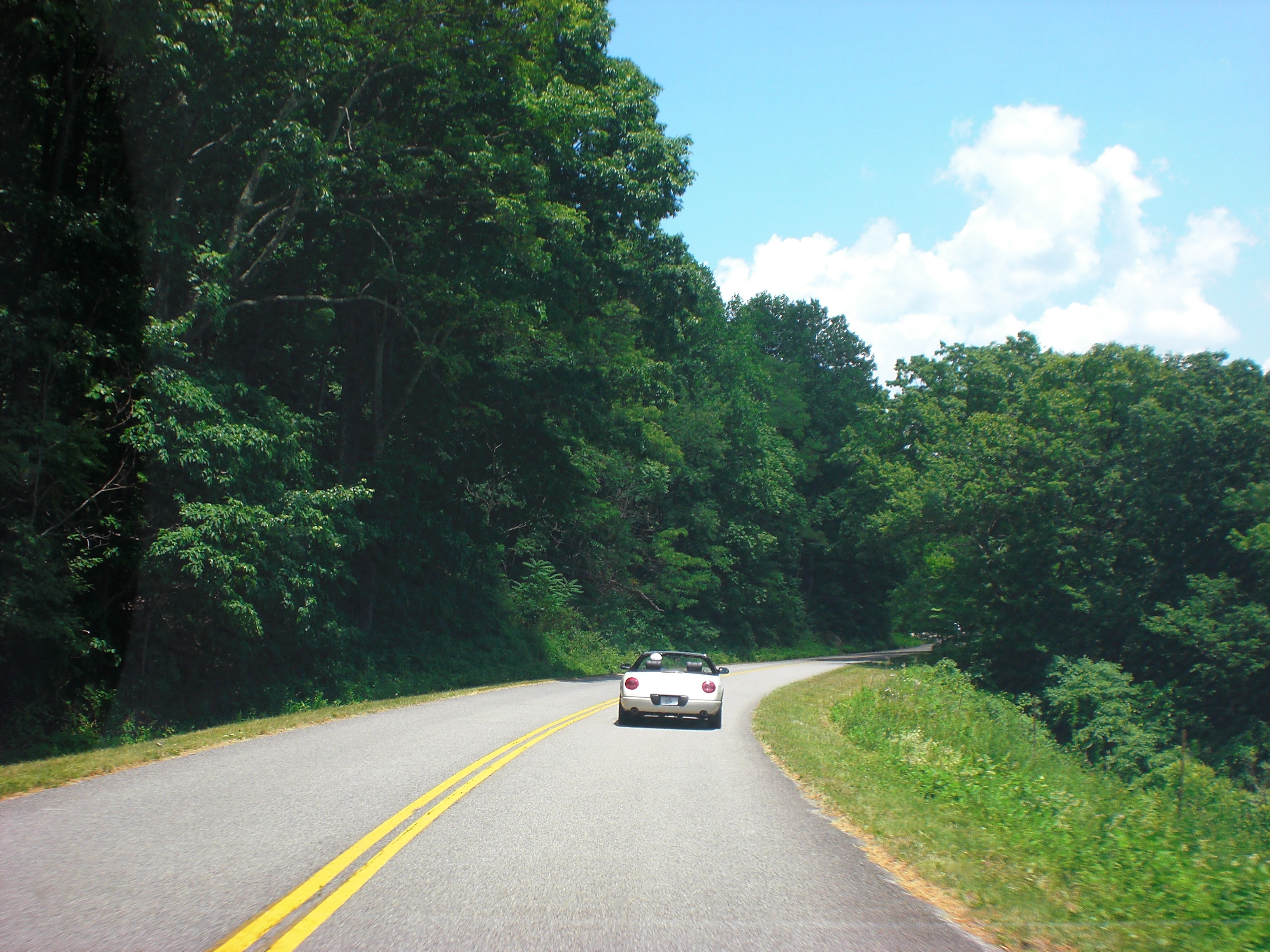
We started day two on the parkway in sunny conditions with the prospect of fewer miles to cover and in milder terrain. The northern portion passes through gently rolling hills, more like a country lane than a mountain road. Bearing this out, only one of the parkway’s 26 tunnels is in Virginia. We also noticed many more cyclists on the roadway than we encountered in the southern portion. The lowest elevation on the parkway, 649 feet, is here, too, where it crosses the James River.
 The expansive views continued and there are places where we could look down into valleys far below on either side of the ridgeline road. We could also see a Wal-Mart in a town adjacent to the parkway, which really disrupted the ambiance, but not for long. As we had the day before, we continued to stop and take pictures and look out across the bluish haze at ridgeline after ridgeline.
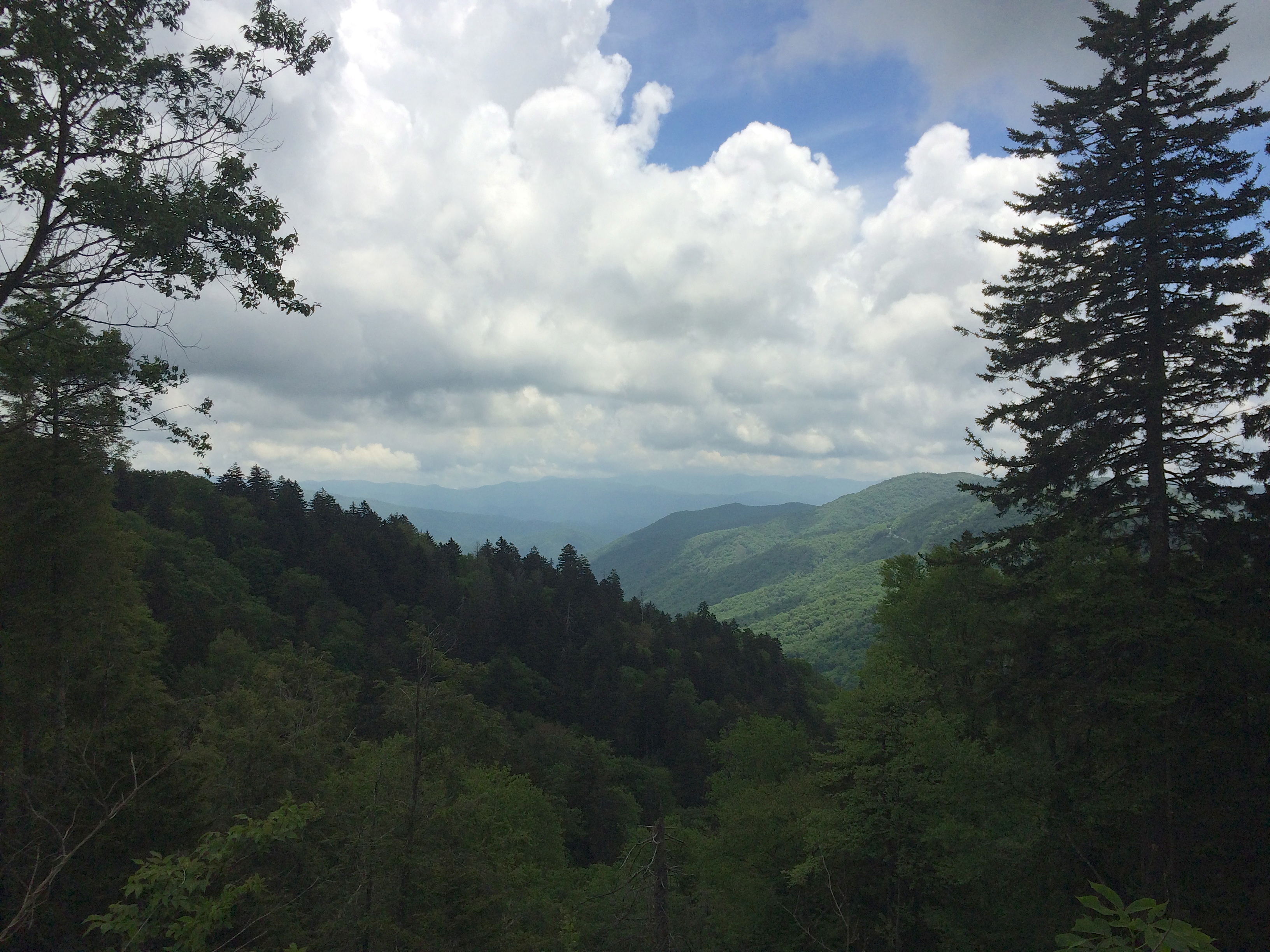
By early afternoon we arrived at the northern terminus of the parkway and the entrance to Shenandoah National Park. There, the Blue Ridge Parkway connects seamlessly with Shenandoah’s Skyline Drive, and we continued along that scenic drive for another 105 miles to the north end of the park.
The park ranger was right – it was a lot of ridge riding in two days! But we did accomplish our goal of getting an introduction to the Blue Ridge Parkway, and look forward to putting it on our agenda for a future trip to explore its offerings in much more detail.
A few other notes:
Cell phone coverage is spotty.
There are no gas stations located on the parkway, and there are only a few places where food is available – nearby towns provide these services.
There is no admission fee to drive the Blue Ridge Parkway.
Although the spring and early summer wildflowers are gorgeous, autumn is also a very popular time to visit the parkway for viewing the spectacular fall foliage.
 Gail Gourley Travels