
Sometimes I remind myself that there are plenty of travel opportunities close to home. Especially with currently high gas prices factored in, this seemed like a good time to explore some nearby options.
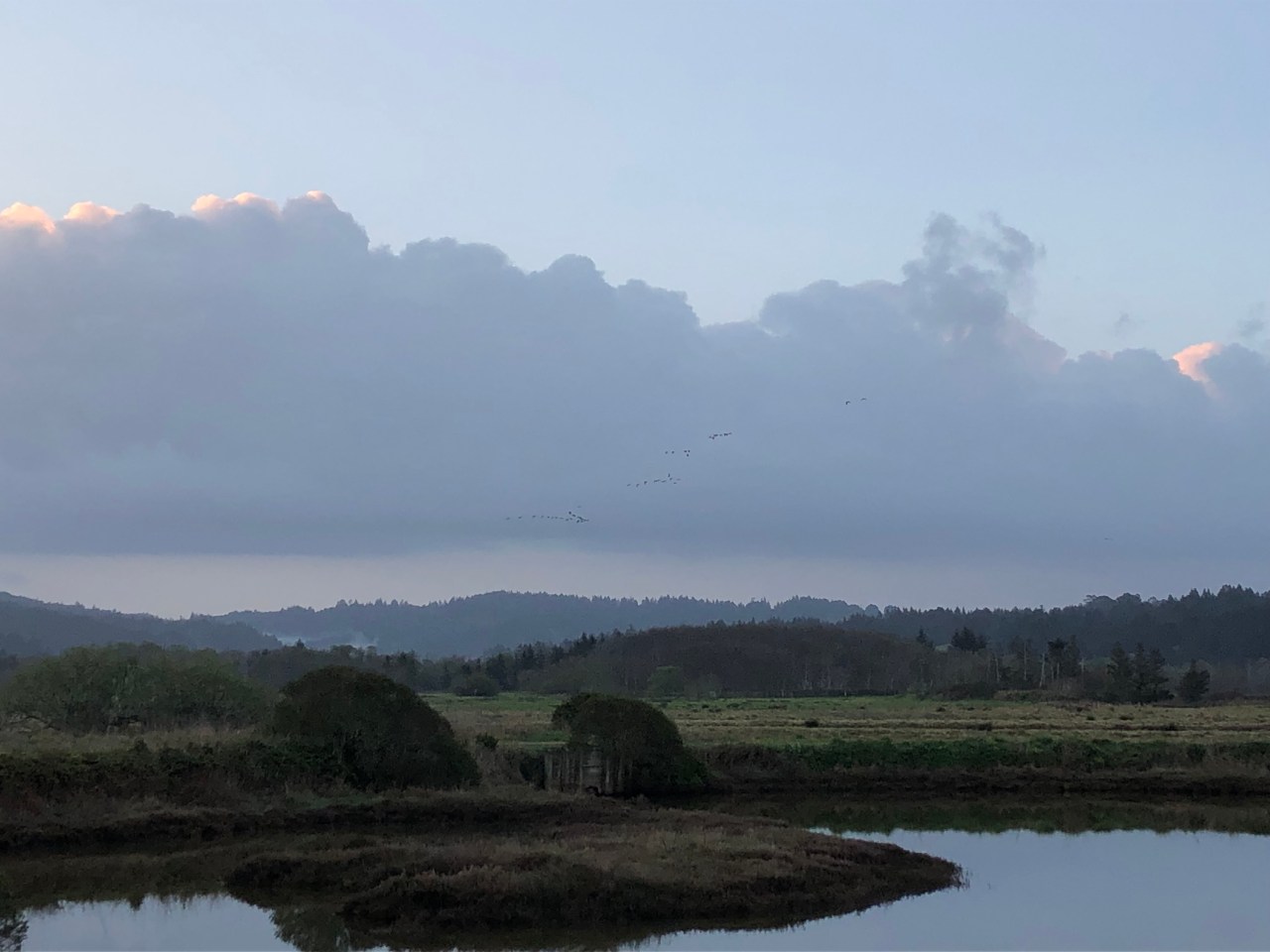
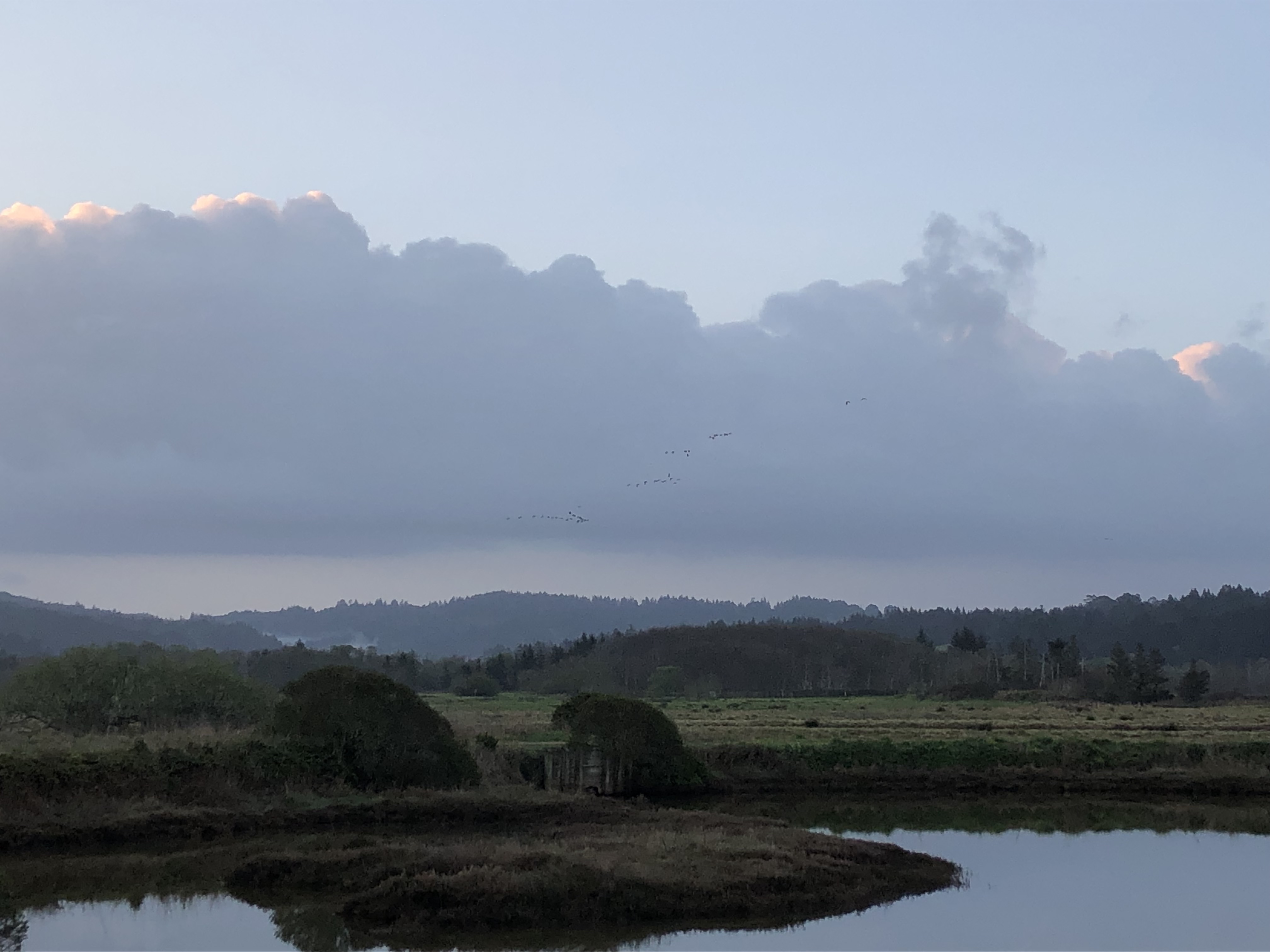
The Aleutian cackling goose fly-off at Humboldt Bay National Wildlife Refuge near Eureka, California is something I’ve wanted to experience for years, and finally recently did.
The “Sunrise at the Refuge” event is at the unit of the refuge that sits at the southeast corner of Humboldt Bay. Each Saturday and Sunday in March, the entrance gate to the refuge’s Salmon Creek Unit opens 30 minutes before sunrise. This provides early-rising humans an opportunity to not only view wetland habitats of Humboldt Bay at sunrise, but more specifically, see and hear potentially thousands of Aleutian cackling geese lift off their nighttime roosts as they head to their daytime feeding grounds.
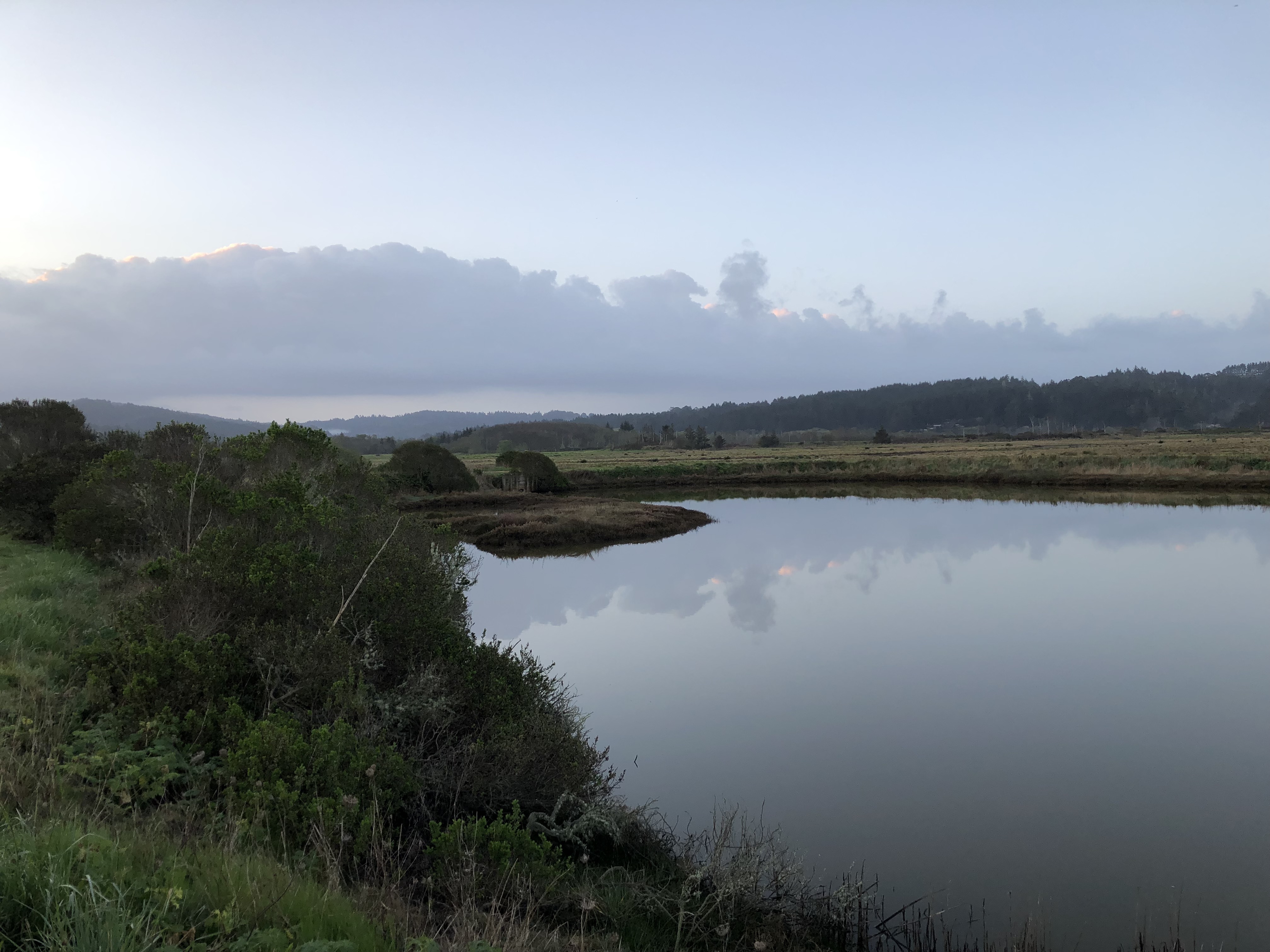
Our group of four realized that the first day of 2022 daylight savings time would allow us to arrive one hour later in the morning than the morning before, with the March 13th local sunrise at 7:31 a.m. after the clocks had “sprung forward” during the night. We arrived at the visitor center parking lot just after 7:00 a.m. where about 10 cars were already parked. We headed out on the Shorebird Loop Trail, a level, gravel 1.75-mile loop. It was cool, in the mid-40s, and damp from the rain showers the night before. It was light enough to see, yet still the muted light of dawn. Just steps from setting out, we were immediately greeted with the soft, pervasive cackling of masses of geese in the nearby wetlands. It sounded like they were getting ready for something.
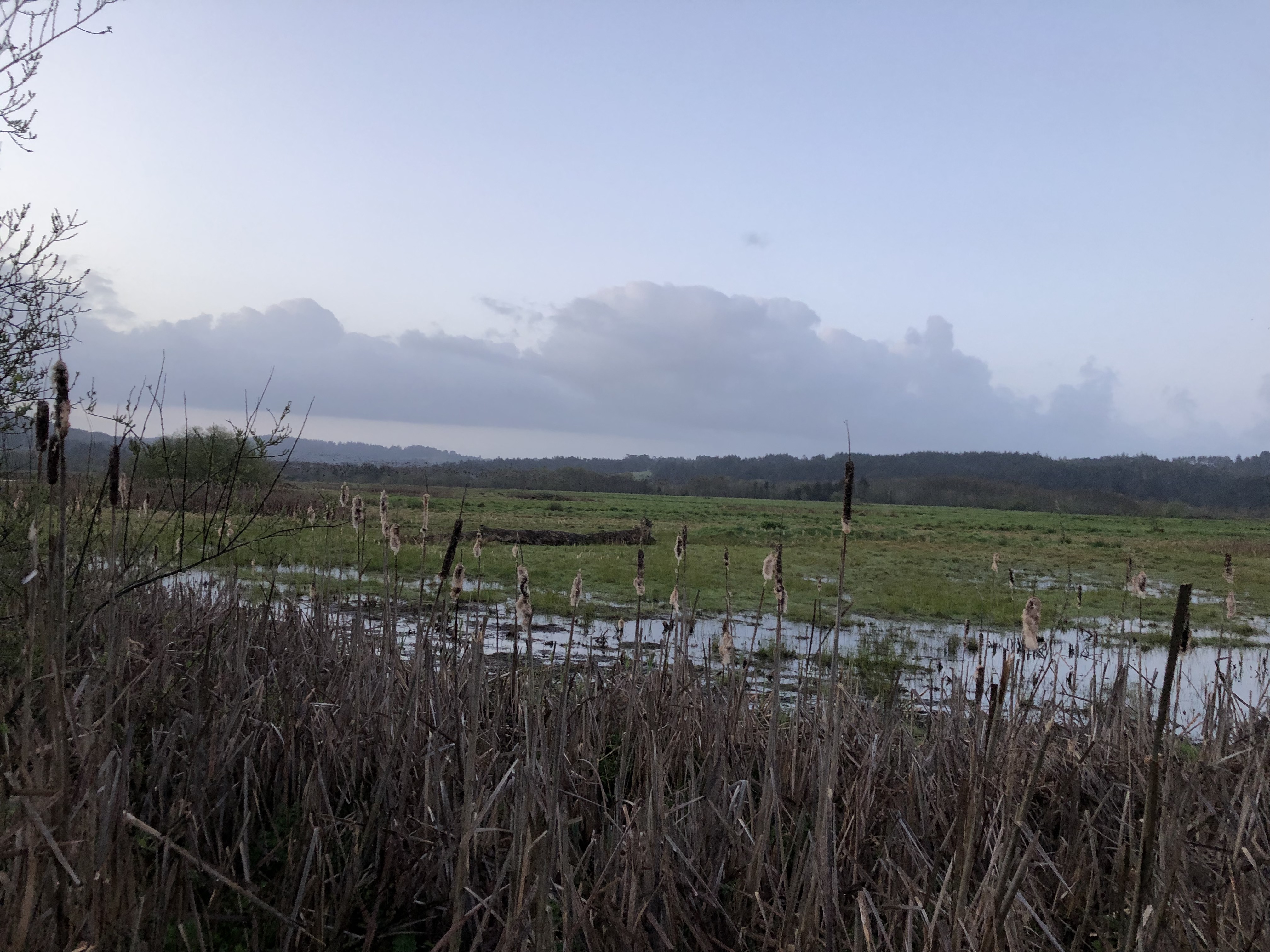
I wasn’t sure what to expect. Did all the geese all over the refuge lift off at once?
The answer is no. In the minutes before the official sunrise, hundreds of geese at a time rose at intervals from the various wetland areas along the trail, after a crescendo of increasingly loud cackling. Not all the groups lifted off together. Rather, they did so in multiple waves, from many different locations and over a time period of about 20 minutes that morning. The surprise for me was that it was not only visually spectacular, but the sound of hundreds of geese flying right over our heads was equally stunning.
Once an endangered species, the total population of Aleutian cackling geese, a small subspecies of the cackling goose, numbered approximately 790 in 1974. Removed from the endangered species list in 2001, the current population is estimated at around 114,000. After wintering in California’s Central Valley, most arrive in the Humboldt Bay region between January and early March. Then in early to mid-April, they depart northern California for their summer home in the Aleutian Islands, and according to signage at the refuge, likely fly 48 to 60 hours non-stop to get there. Amazing!
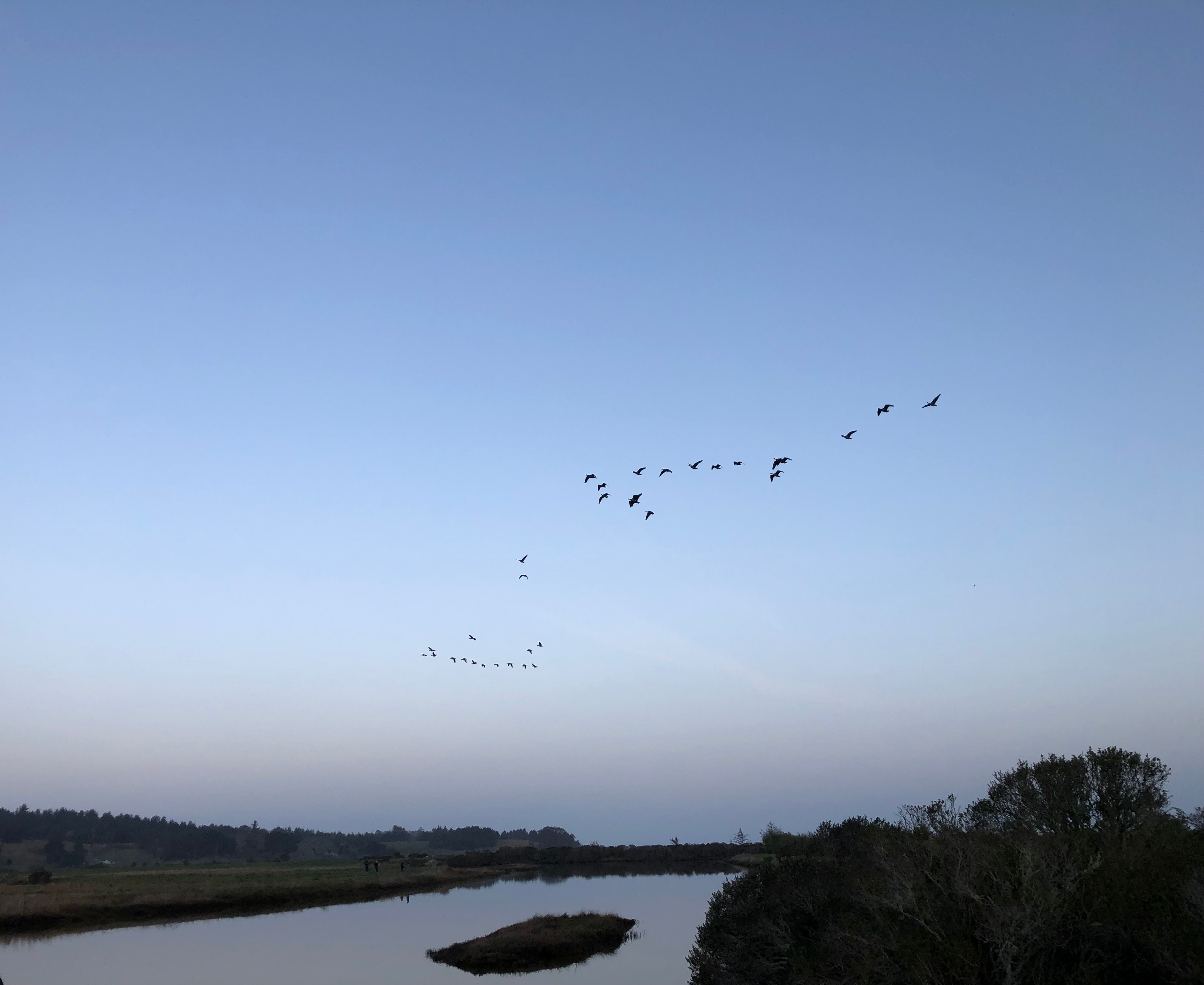
This day’s visit was intended to only experience the fly-off, so once the waves of geese lifting off ended, we walked a little further along the trail, took a few more pictures, and headed off to breakfast. But there are many other activities at the refuge, like hiking, wildlife watching, photography, non-motorized boating, fishing, and hunting. Many of these will bring us back.
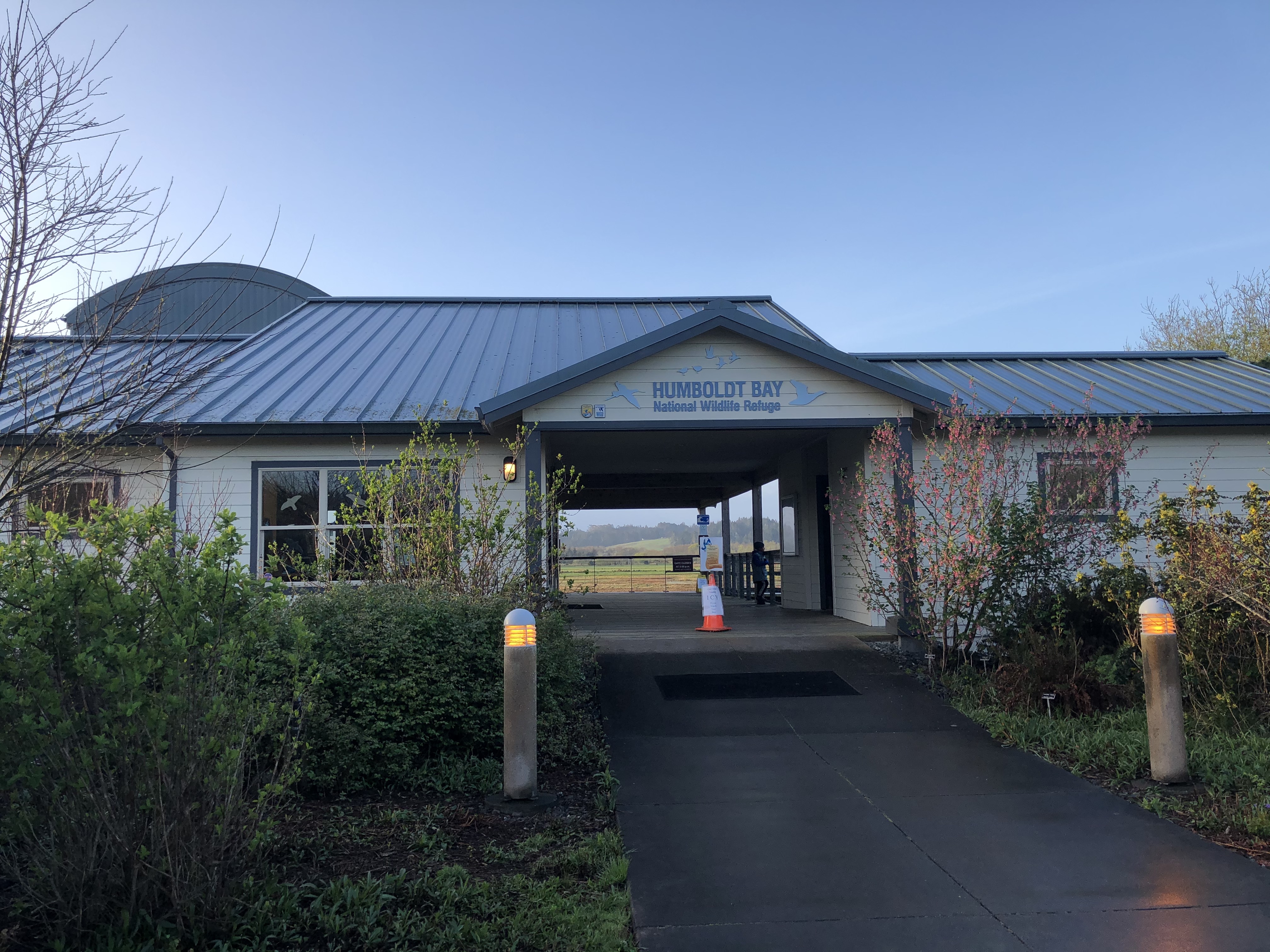
The Humboldt Bay National Wildlife Refuge Salmon Creek Unit is approximately 12 miles south of Eureka, California along U.S. Highway 101. Take Exit 696.
 Gail Gourley Travels
Thanks for sharing. We have never experienced it in person.
LikeLike
Janet, we’d intended to do it for a long time. I recommend it!
LikeLike
Thank you so much for sharing this. Just beautiful!
LikeLike
It really was, Kathy. We loved it!
LikeLike